
How older stone homes handle moisture
Traditional stone buildings were built to let moisture move through the walls and evaporate. A bathroom produces a lot of steam in one place, so the aim is to get that moisture out of the room quickly, before it settles into walls and timbers.
The Scottish Government's guidance on converting traditional buildings says the ventilation standard mainly targets bathrooms and other moisture-producing rooms. It recommends extract fans ducted to the outside, switched manually or by a humidity sensor, and insulated ductwork to stop condensation forming inside it. It also advises keeping surface humidity below about 70 to 75% to prevent condensation and mould.
What that means for your bathroom
- Good extraction is essential. A properly ducted extractor fan, ideally with a humidity sensor, does a lot of the work.
- Keep wet areas sealed, and the rest breathable. Inside the shower and around the bath, walls need a proper waterproof finish. Elsewhere, avoid sealing old walls in materials that trap moisture.
- Don't block existing vents. Older homes often rely on vents and airflow through hidden spaces.
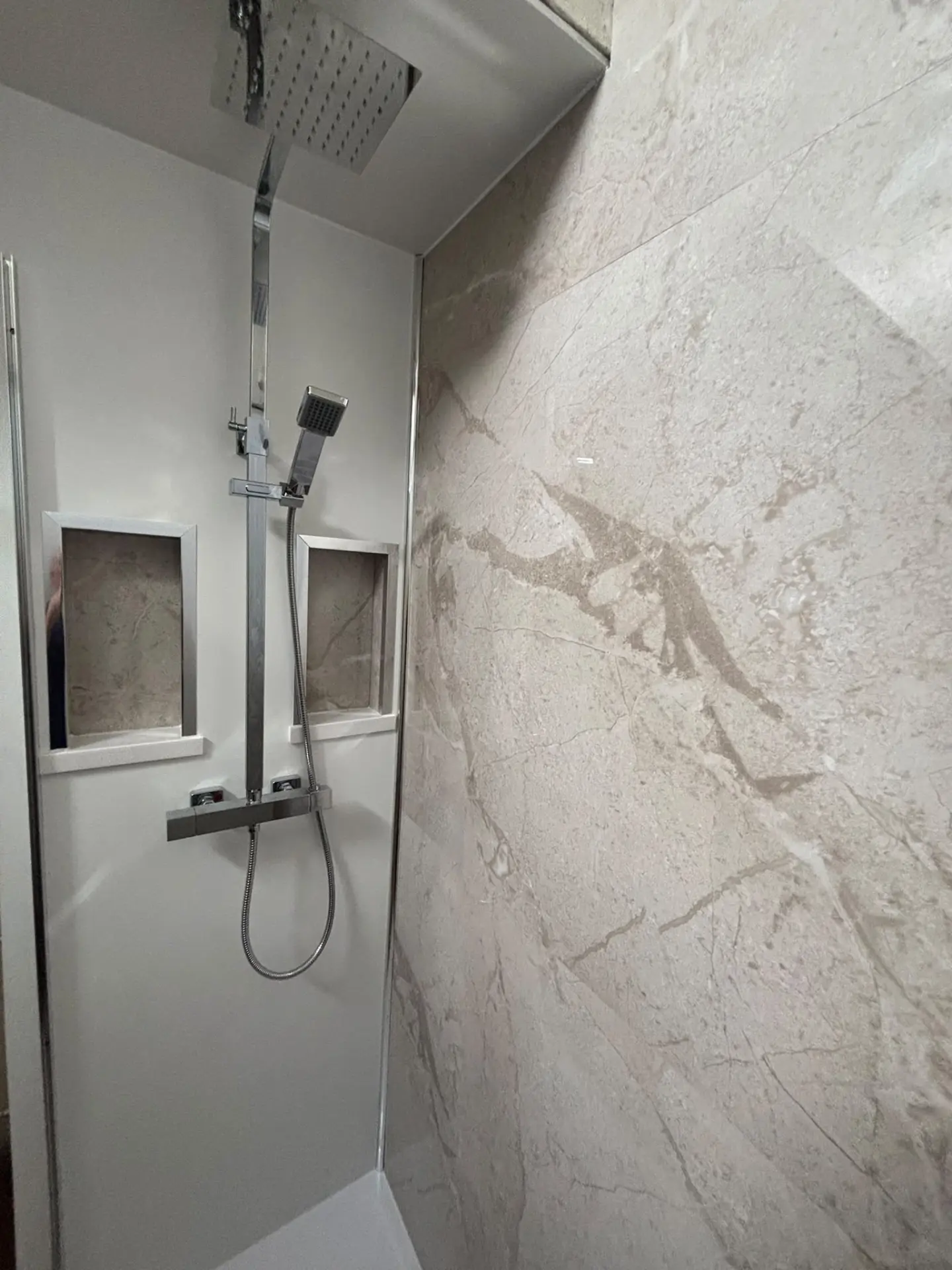
Uneven walls and floors
Walls in older homes are rarely perfectly straight or square, and timber floors can have a slope or some movement. We work with the room's shape rather than against it. Wall panels can give a clean, square finish on uneven walls, and floors may need levelling or boarding before new bathroom flooring goes down.
Pipes and waste
Thick solid walls and timber floors make pipe routes a bigger part of the plan. The route for the waste is often the deciding factor in where the toilet and shower can go. Older pipework may also need replacing. See our bathroom plumbing service.
Listed buildings
If your home is listed, work that affects its character can need listed building consent from Fife Council, including some internal work. Original features, such as panelling, cornices or old floors, may need protecting. The Historic Environment Scotland portal lets you search for listed buildings.
Conservation areas
Many Fife towns and villages have conservation areas, including St Andrews, Cupar, Anstruther and Pittenweem. Inside the home, a bathroom refit doesn't usually need planning permission. Outside changes can, such as a new extractor outlet or soil pipe on a front wall. Some areas, such as Pittenweem, have an Article 4 direction that adds further controls. Fife Council can confirm what applies.
Building warrants
Like any bathroom in Scotland, some work needs a building warrant, such as structural changes. Our building warrant guide explains what's exempt and what isn't.
Frequently asked questions
Can I have a modern bathroom in an old stone house?
Yes. The key is good extraction, proper waterproofing in the wet areas, and a layout that works with the building.
Do I need consent for a new bathroom in a listed building?
Possibly. Work that affects a listed building's character can need listed building consent, even inside. Check with Fife Council first.
Why does ventilation matter so much in older homes?
Solid stone walls and timbers can absorb moisture. Getting steam out quickly helps prevent condensation, mould and decay.
Can wall panels go on uneven stone walls?
Often, yes, with the right preparation. Panels can help give a straight, clean finish.
Back to All Services