Why people choose panels
- No grout lines to clean, discolour or crack.
- Waterproof, with few joints for water to find.
- Quicker to fit than tiling, so the bathroom is back in use sooner and there's less mess.
- Easy to clean, with a wipe-down surface.
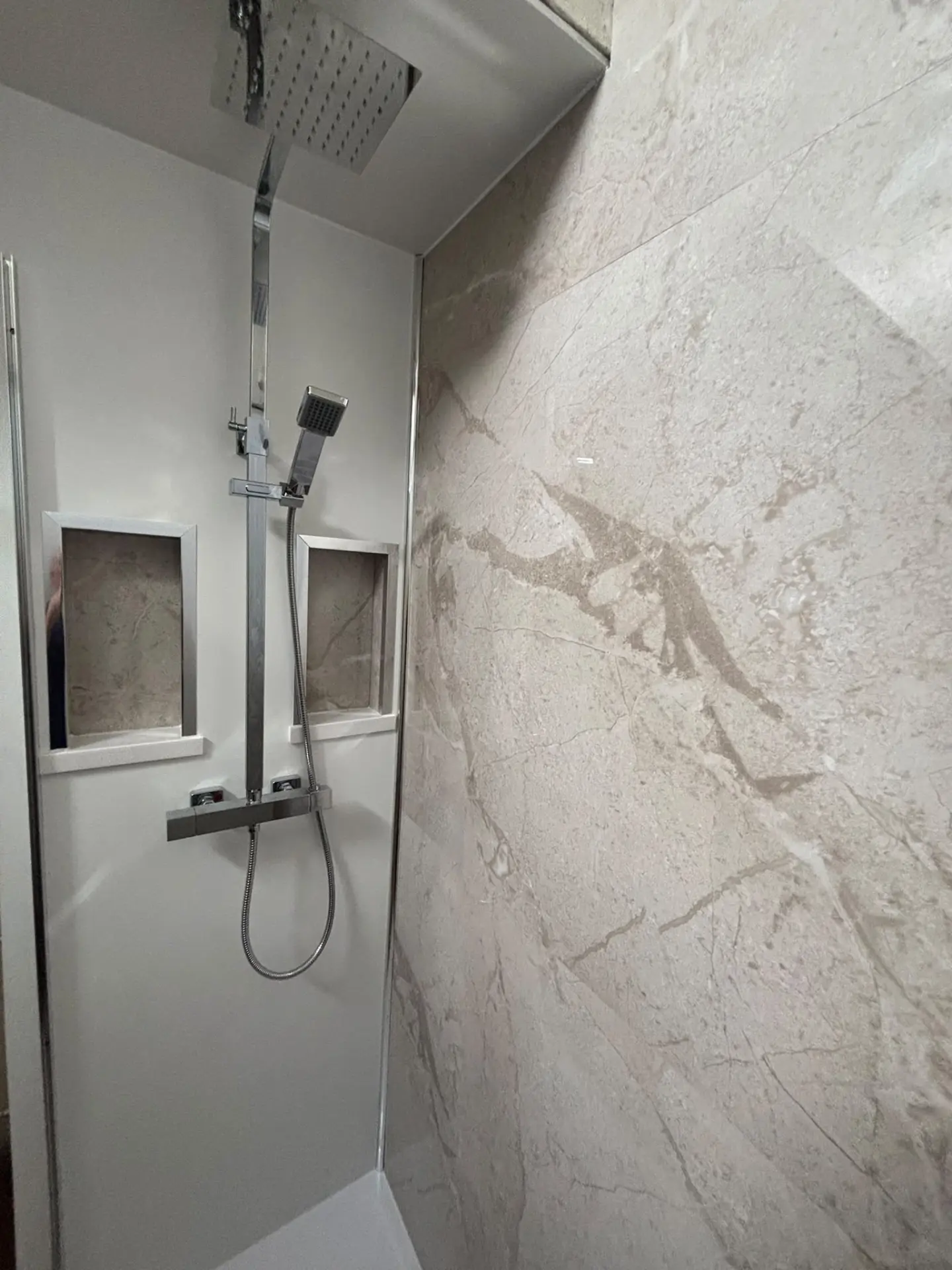
- Lots of finishes, from plain gloss and matt to marble-effect, stone-effect and tile-effect.
Types of wall panel
| Type | What it's like | Good for |
|---|---|---|
| PVC panels | Light, inexpensive, narrow planks or wider sheets | Budget refits, ceilings, utility rooms |
| Laminate-faced panels on a core | Rigid, hard-wearing, large sheets with a realistic finish | Showers and whole bathrooms |
| Acrylic-faced panels | Glossy, smooth, available in bright colours | A sleek, modern look |
Thin, flexible panels are cheaper but can feel hollow, dent more easily and show the wall behind if it isn't flat. Rigid, thicker panels feel more like a solid wall, and are the better choice inside a shower where they take the most use.
Choosing a finish
The finish affects how the bathroom feels and how much cleaning it shows. Dark, plain gloss panels look striking but show every water mark and trace of limescale. Patterned finishes such as marble-effect or stone-effect hide splashes much better between cleans. Light matt finishes are calm and easy to live with. If you can, look at a sample in the bathroom itself, because the lighting in a bathroom, often a single overhead light and a mirror light, can make a finish look quite different from the showroom.
How panels are fitted
- Check the walls. Panels need a sound, reasonably flat surface. Loose plaster or tiles are dealt with first.
- Plan the layout so joints fall in sensible places, away from the main spray where possible.
- Cut the panels to size, with clean holes for the shower valve, pipes and any fittings.
- Fix them with the right adhesive and sealant, or onto battens where the wall isn't good enough.
- Seal the joints and edges with the trims, profiles and sealant the system is designed for.
- Seal to the tray or bath so water can't get in at the bottom edge.
The joints are the part that matters most. A panel is completely waterproof; the places where panels meet each other, the tray, the bath and the corners are where water could get in, so they need to be done exactly as the system requires.
Can panels go over tiles?
Often, yes. If the existing tiles are firmly stuck and the wall behind them is sound, many panel systems can be fitted straight over them, which saves the mess of taking them off. Loose or hollow tiles need removing first, and the extra thickness needs allowing for around the shower valve, window reveals and the edges of the tray.
Panels or tiles?
Panels win on cleaning, speed and having fewer joints. Tiles win on choice and the look some people want, and a damaged tile can be replaced on its own. Many bathrooms use both: panels in the shower, where water is heaviest, and tiles or paint elsewhere. Our guide to bathroom wall panels or tiles goes through the choice in more detail.
Around baths and showers
Wall panels are a natural fit for showers and for the wall around a bath with a shower over it. They're also popular in walk-in showers and bath-to-shower conversions, where the walls get soaked every day. See our pages on walk-in showers and replacing a bath with a shower.
Looking after panels
Most panels just need a wipe with warm water and a soft cloth, or a mild bathroom cleaner, now and again. Avoid abrasive pads, scouring creams and harsh chemicals, which can dull or scratch the surface over time. Keep an eye on the sealant at the bottom edge and corners, and replace it if it starts to lift. A good extractor fan stops condensation sitting on the walls and helps everything stay fresh.
Rental properties
Panels are a popular choice in rented and HMO bathrooms, because there's no grout to go black between tenancies and they're quick to clean. Our guide to bathrooms in rented and HMO properties covers more.
Frequently asked questions
Are bathroom wall panels waterproof?
The panels themselves are. The joints, edges and corners need sealing properly with the system's trims and sealant to keep the whole wall watertight.
Can wall panels be fitted over tiles?
Often, yes, if the tiles are firmly stuck and the wall is sound. Loose tiles need removing first.
Are panels better than tiles?
They're easier to clean and quicker to fit, with no grout. Tiles give more choice of looks. Many bathrooms happily use a mix of both.
How do I clean wall panels?
Warm water and a soft cloth, or a mild cleaner. Avoid abrasive pads and harsh chemicals.
Can you fit panels in a whole bathroom?
Yes. Panels can go on every wall, or just around the shower and bath, with paint or tiles on the rest.
Do you give free quotes?
Yes. Call 07453 243277 or send an enquiry, and we'll come back to you with a free quote.
Back to All Services