Which shower suits your home?
The first question is always the hot water system.
| Your system | Shower that usually suits | Things to know |
|---|---|---|
| Combi boiler | Mixer shower | Good pressure; flow drops if other taps are running |
| Unvented cylinder | Mixer shower | Strong pressure to several outlets at once |
| Gravity-fed (tank in the loft) | Mixer with a pump, or electric | Pressure is often low upstairs without help |
| Any system | Electric shower | Heats its own water; keeps working if the boiler fails |
If you're not sure what you have, a quick look at the boiler, the airing cupboard and the loft tells us. Fitting a shower that suits the system is the difference between a shower you enjoy and one you put up with.
Mixer showers
A mixer shower blends hot and cold water from your existing supply. The valve can be exposed on the wall or concealed behind it, with just the controls showing. A thermostatic valve is worth having: it holds the temperature steady when someone flushes the toilet or runs a tap elsewhere in the house, and stops sudden blasts of hot water.
Electric showers
An electric shower takes cold water from the mains and heats it as it flows. It doesn't rely on the boiler at all, which makes it a good choice where hot water is limited or as a back-up in a second bathroom. Flow depends on the power rating and the mains pressure. An electric shower needs its own suitably sized electrical supply, which has to be in place before it's fitted.
Over the bath or a separate shower?
A shower over the bath saves space and keeps a bath in the house. It does need a proper screen and well-sealed walls, because water finds its way past a curtain and into the corners. A separate enclosure or walk-in shower is more comfortable and easier to keep watertight. If you're thinking of taking the bath out altogether, see our page on bath to shower conversions, or walk-in shower installation for open, low-level showers. If you're replacing the bath and shower together, see bath and shower installation.
What a proper installation involves
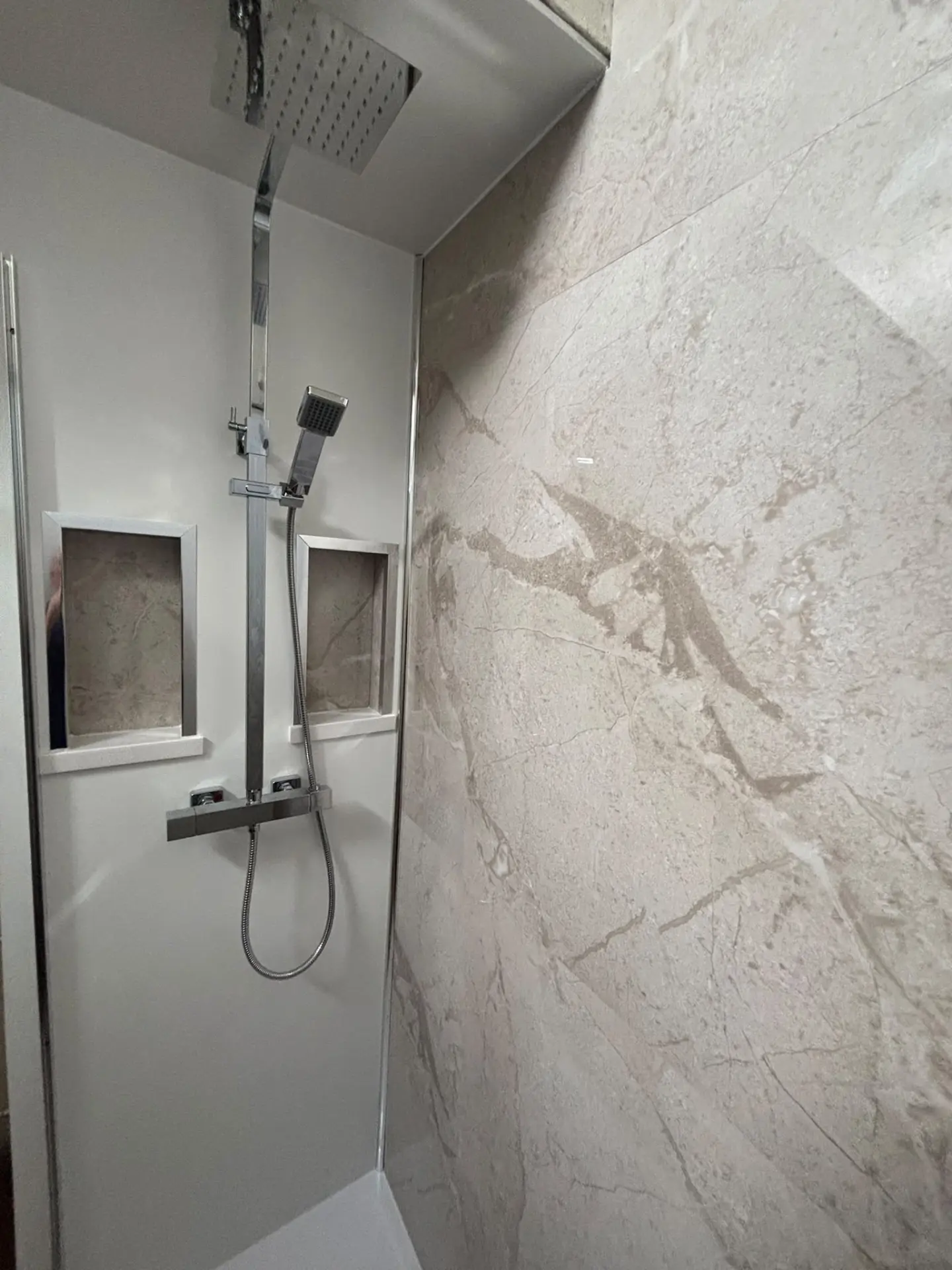
- Remove the old shower and check the walls and tray area for water damage.
- Run the supplies to the valve, with isolation valves so it can be serviced later.
- Set the valve at a comfortable height and fix it solidly into the wall.
- Fit the tray level and fully supported, with the waste connected and sealed.
- Waterproof the walls with wall panels or tiles on a suitable backing.
- Fit the screen or enclosure, riser rail and head.
- Seal and test, checking the waste drains properly and nothing leaks.
Why showers leak
Most shower leaks don't come from the shower itself. They come from the edges: a tray that flexes because it wasn't properly bedded, sealant that's been pulled away, a waste joint that wasn't made up properly, or grout that's let water get behind the tiles. A solidly bedded tray and well-sealed walls stop most of that before it starts. If you've already got a leak, see our page on bathroom plumbing.
Walls around the shower
The walls around a shower take more water than anywhere else in the house. Waterproof wall panels are a popular choice: no grout lines, quick to fit and easy to keep clean. Tiles give a wider choice of looks, but need to go onto a suitable backing and be grouted and sealed properly. Our page on bathroom and shower wall panels has more.
Shower trays
A good tray makes a big difference. Low-profile stone resin trays are stiff, sit close to the floor and look clean. Whatever tray is used, it needs to be bedded so it can't flex, because a tray that moves will eventually break its seal. Where the floor is timber, the subfloor under the tray needs to be solid.
Water regulations
Shower installations in Scotland need to meet Scottish Water's rules on water fittings, which cover things like approved fittings and preventing water flowing back into the supply.
Frequently asked questions
What type of shower do I need?
It depends on your hot water system. Combi boilers and unvented cylinders suit mixer showers; low-pressure gravity systems may need a pump or an electric shower.
Can you replace my old electric shower?
Yes. A like-for-like electric shower can usually go on the existing supply, if that supply is suitable for the new unit's power rating.
Why does my shower go hot and cold?
Usually because other taps or the toilet are changing the pressure. A thermostatic valve keeps the temperature steady.
Why is water getting under my shower tray?
Usually a failed seal, a tray that flexes, or a waste joint. Fixing the cause matters more than re-sealing over it.
Can you fit a shower over my bath?
Yes, with a proper screen and well-sealed walls around it.
Do you give free quotes?
Yes. Call 07453 243277 or send an enquiry, and we'll come back to you with a free quote.
Back to All Services