Choosing a bathroom floor
| Flooring | What it's like | Things to know |
|---|---|---|
| Porcelain or ceramic tiles | Hard-wearing, waterproof surface, wide choice | Needs a stiff, flat floor; choose a tile with good grip |
| Luxury vinyl tiles (LVT) | Warmer and softer underfoot, realistic finishes | Needs a very smooth base; seams sealed at the edges |
| Sheet vinyl | One piece with few or no joints | Budget-friendly and practical; good in small rooms |
| Waterproof rigid flooring | Click-together planks with a waterproof core | Quick to fit; edges and pipes need sealing |
There's no single best floor. Tiles last a very long time and suit wet rooms and walk-in showers. Vinyl is warmer and quieter underfoot, and a good choice upstairs. Waterproof click flooring is quick to lay and forgiving. What matters most is that the floor underneath suits the flooring going on top, and that it's prepared properly before anything is laid.
Preparation is everything
Timber floors. Most upstairs bathrooms, and many downstairs ones in older houses, have timber floorboards on joists. Boards flex, and tiles can't. Before tiling, loose boards are screwed down and a layer of suitable boarding goes over the top to stiffen the floor and give a flat, stable base. Vinyl needs a smooth overlay too, because every board edge and screw head shows through.
Concrete floors. Ground floors are often concrete. They need to be dry, sound and level. Hollows and bumps are levelled with a self-levelling compound before the new floor goes down.
Old flooring. Old vinyl, tiles and adhesive usually need to come up, so the new floor goes onto a clean, sound base rather than another layer of problems.
Floor height and the door
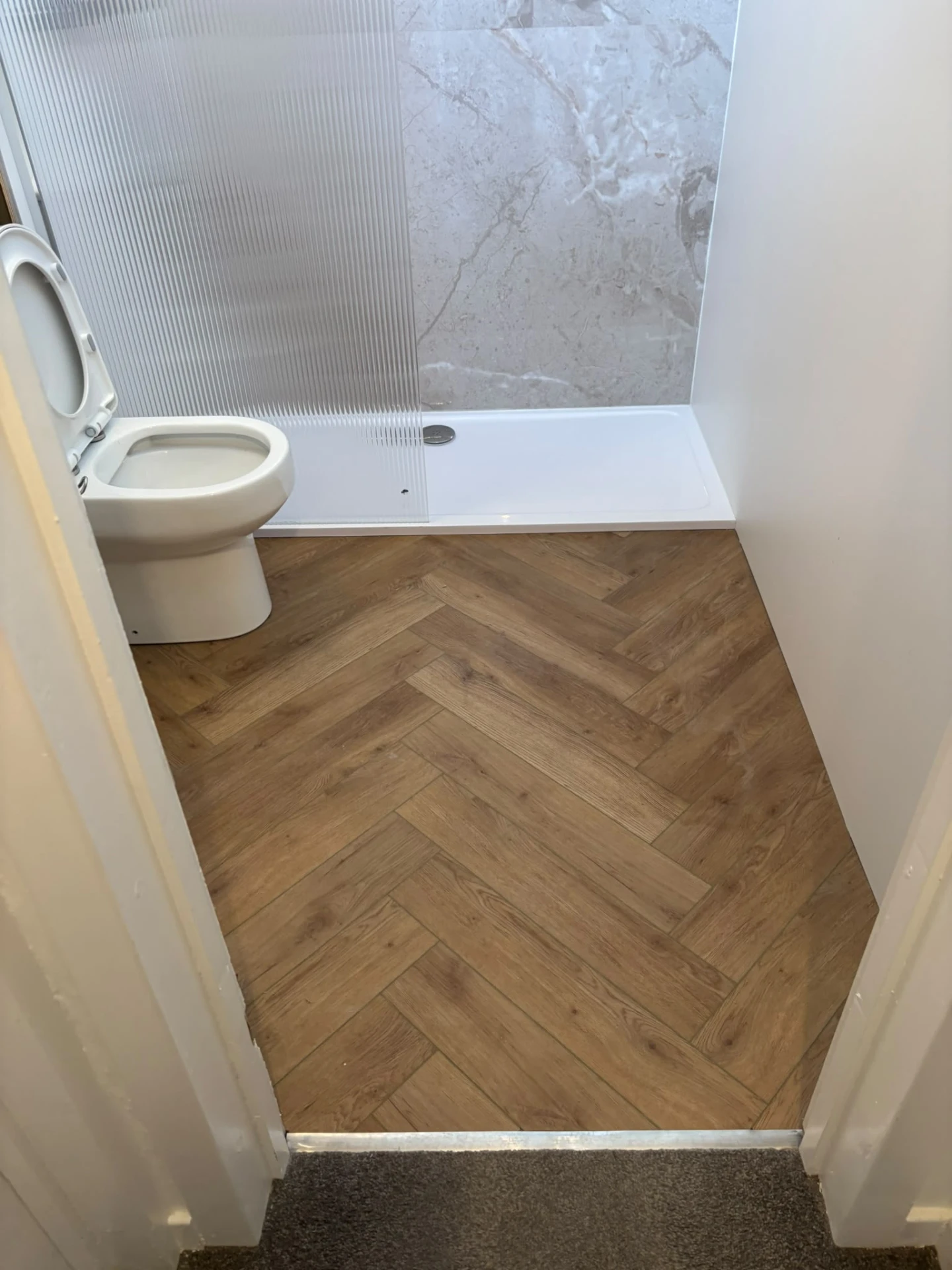
New boarding and flooring raise the floor slightly. That's usually not a problem, but it's worth thinking about the doorway. The bathroom door may need trimming to clear the new floor, and a neat threshold strip where the bathroom meets the landing or hall gives a tidy, durable edge between the two floors.
Grip
Bathroom floors get wet, so grip matters, especially for children and older people. Highly polished tiles look smart in a showroom but can be slippery with wet feet. Matt or textured tiles, and vinyls designed for bathrooms, give better grip. For accessible bathrooms and wet rooms, a non-slip floor is essential; see our page on accessible bathrooms and wet rooms.
Edges and seals
Water finds the edges. Around the bath, the shower tray, the toilet and the walls, the floor needs to be sealed so water can't get underneath. Tiled floors need a flexible sealant at the junction with the bath and walls rather than grout, because those joints move. Vinyl needs its edges sealed and its seams made properly.
Underfloor heating
Electric underfloor heating mats can go under tiles or some vinyl floors, giving a warm floor and helping the room dry quickly. If you're thinking about it, it has to be planned before the flooring goes down, and it needs a suitable electrical supply and controls.
Older homes in Fife
Older houses often have uneven floors, old boards with gaps and joists that have been notched for pipes over the years. Those floors need more preparation before a new floor can go down, and sometimes boards or joists need repairing first. It's always better to find out and fix these problems before the new flooring is laid. Our guide to a bathroom in an older stone home covers more of what older properties need.
Part of a bigger job
Flooring usually goes down as part of a bathroom refit, after the old suite comes out and before the new one goes in, so there are no awkward cuts around the toilet and bath. See our page on complete bathroom renovations.
How we lay a bathroom floor
- Remove the old flooring and check the floor underneath.
- Repair and stiffen timber floors, or level concrete ones.
- Plan the layout so cuts are even and tiles line up with the room.
- Lay the flooring with the right adhesive and fixings for the floor and the finish.
- Grout or seal the joints, then seal the edges around the bath, tray, toilet and walls.
- Clear up and let adhesives and grout cure before heavy use.
Frequently asked questions
What's the best flooring for a bathroom?
It depends on the room and the floor. Tiles are very durable and easy to clean; vinyl is warmer and quieter; waterproof click flooring is quick to fit.
Can you tile over floorboards?
Not directly. The floor needs stiffening with a suitable board first, or the tiles and grout will crack.
Why is my vinyl floor lifting at the edges?
Usually water getting underneath at an unsealed edge, or a base that wasn't smooth or dry enough.
Are bathroom tiles slippery?
Some polished tiles can be when wet. Matt or textured tiles, and bathroom vinyls, give better grip.
Can you lay a new floor without changing the bathroom?
Sometimes, but it's much easier and neater when the toilet and other fittings are lifted out first.
Do you give free quotes?
Yes. Call 07453 243277 or send an enquiry, and we'll come back to you with a free quote.
Back to All Services