
What a building warrant is
In Scotland, a building warrant is the approval you need from your council's building standards team before certain building work starts. In Fife, that's Fife Council. It's separate from planning permission. Scotland's rules are different from England's, so advice written for English homes doesn't always apply.
Bathroom work that usually doesn't need a warrant
The Scottish Government's building standards handbook lists work that doesn't require a warrant. For bathrooms, that includes:
- Replacing fittings or equipment, such as a basin, bath or shower, as long as the result is no worse than before.
- Moving a sanitary facility within the same room.
- Adding a single sanitary facility, such as a basin or shower, with its waste pipe. This doesn't cover a toilet.
- Fitting an extractor fan.
- Replacing wall or floor coverings with the same general type of material.
The catch: it still has to meet the regulations
No warrant doesn't mean no rules. The handbook is clear that work not needing a warrant must still comply with the building regulations. That covers things like drainage, ventilation and safety. A good bathroom fitter works to these standards whether or not a warrant is needed.
Bathroom work that can need a warrant
- Structural changes, such as removing or altering a loadbearing wall to make a bigger bathroom.
- Changing how waste water is discharged, for example disconnecting from the public sewer.
- Adding a new toilet. The single-fitting exemption doesn't cover toilets, so check whether a warrant is needed.
- Work that affects a wall shared with a neighbour, such as a separating wall in a flat or semi.
Wet-floor showers and wet rooms
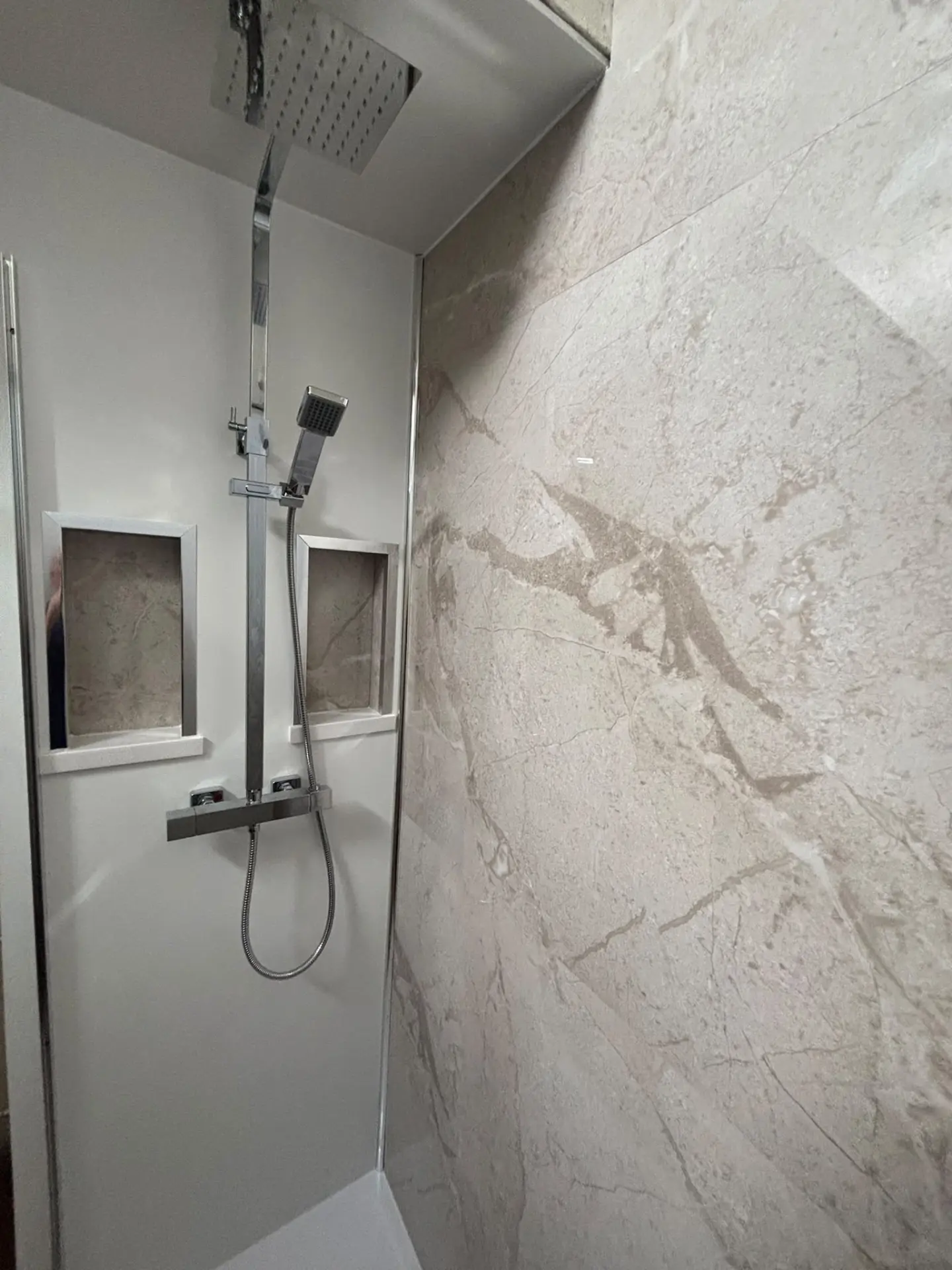
The handbook specifically says a sanitary facility shouldn't be treated as a wet-floor shower room. In other words, the simple exemption for adding a shower isn't meant to cover turning a bathroom into a wet room. If you're planning a wet room or level-access shower, check with Fife Council's building standards team before work starts.
Listed buildings and conservation areas
A building warrant is only one kind of approval. If your home is listed, work that affects its character can need listed building consent, even inside. If it's in a conservation area, changes to the outside, such as new vents or pipes on a front wall, may need permission. Fife Council can tell you what applies.
Before you book your bathroom
- Describe the work clearly. Like-for-like replacement, moving fittings within the room, or something bigger?
- Check for structural work. Any wall coming out or moving is a warrant question.
- Check drainage. New connections or a new toilet may need a warrant.
- Planning a wet room? Ask Fife Council's building standards team first.
- Listed or in a conservation area? Check those consents too.
Frequently asked questions
Do I need a building warrant to replace my bathroom suite?
Usually not, if you're replacing fittings with the same type and the result is no worse than before. The work still has to meet the regulations.
Do I need a building warrant for a walk-in shower?
Replacing a bath with a shower tray and enclosure is often covered by the exemptions. A wet-floor shower is different, so check with the council. See our walk-in shower installation.
Does an extractor fan need a building warrant?
No. Fitting an extractor fan is listed as work that doesn't need a warrant, but it still has to meet the regulations.
Who should check whether I need a warrant?
You, as the homeowner, are responsible. Your fitter should flag anything that might need one, but Fife Council's building standards team has the final say.
Is a building warrant the same as planning permission?
No. They're separate. Most bathroom work needs neither, but some needs a warrant, and work on listed buildings can need listed building consent.
Back to All Services